Welcome to Conshohocken
July 1, 2026
Young Again – Conshy Style
July 12, 2026General Lafayette in Conshohocken
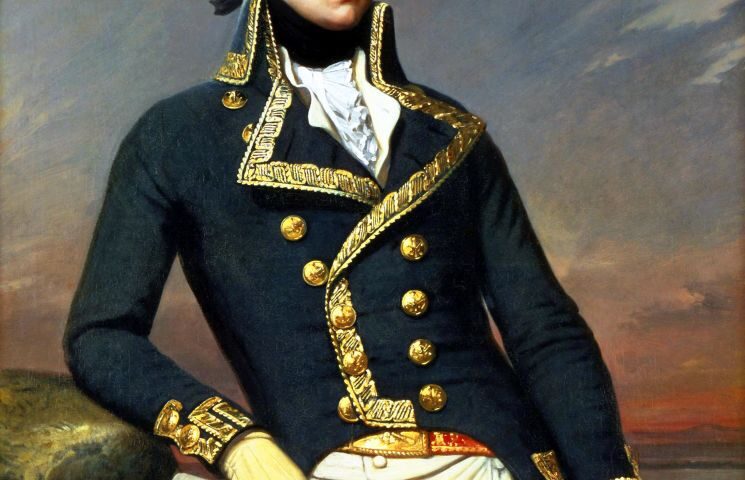
France/USA: 'Lafayette' (Marie-Joseph Paul Yves Roch Gilbert du Motier, Marquis de Lafayette, 1757-1834), Oil on canvas, Joseph Desire Court (1797-1865), 1791. (Photo by: Pictures from History/Universal Images Group via Getty Images)
General Lafayette in Conshohocken
7/4/2026
by Brian Coll
A funny thing happened while I was working on this article/history… I happened to simply google Lafayette in Conshohocken and here is the first thing that popped up:
From Neighborhoods.com (looked like real estate listings)
About Lafayette Crossing
Lafayette Crossing is a suburban neighborhood in Conshohocken, PA. Do you want to know when new listings come on the market? Set an alert to be notified when there are new homes for sale in Lafayette Crossing
Quick Facts
| Closed Prices: | $465,000 to $530,000 |
|---|---|
| Median Sale Price: | $497,500 |
| Association Fee Ranges: |
| Type: | Attached Home (Condo, Townhouse, Loft, etc.) |
|---|---|
| Age: | 2013 |
| Sq. Ft.: | 2104 to 2360 Sq. Ft. |
| Bedrooms: | 3 to 4 Bedrooms |
| Bathrooms: | 3 to 4 Bathrooms |
I’m not sure where this development actually is in Conshohocken.
This was actually a good segway into our brief history of General Lafayette in Conshohocken. He was known to have crossed the Schuylkill River at Matson’s Ford. He was responsible for a timely retreat from the area known as Barren Hill. In mid May of 1778, the troops in his command retreated from a very large British force that was trying to encircle Lafayette.
The Battle of Barren Hill began on May 20th 1778. British forces surrounded a large number of troops under the command of Marquis de Lafayette. The French general’s troops occupied a command post at Barren Hill (now Lafayette Hill) The British army was in control of the American capital, Philadelphia. American troops were still encamped at Valley Forge. Lafayette and the troops under his command advanced slowly towards the city in an attempt to apply pressure on the occupying force. Their maneuvers resulted in the Battle of Barren Hill. British forces learned of General Lafayette and his troops position. At the time close to 3,000 troops were under Lafayette’s command. Approximately 6,000 British troops under General William Howe were sent to the area and thought they surrounded the American forces. However General Lafayette used what is now Barren Hill road and left the area. They came through Conshohocken and crossed at Matson’s Ford. The Americans were aided by Oneidas (native Americans) in the retreat. A large group of Oneidas helped the escape. During a skirmish at the base of Mason’s Ford, several Oneidas were killed in battle. There are also reports of troops drowning in the crossing of the Schyulkill River. In reality, the Battle of Barren Hill was more of a retreat than a battle. (while I was researching the details of the battle, I saw a quote that I want to share with you. Henry Laurens noted, “the Marquis’s retreat has done him more honor than he would have gained by a drawn battle or light Victory.”)
To give you a visual of these landmarks… Matson’s Ford is roughly 100 yards upstream from where the current Matsonford Bridge is. Until recently, you could actually see a faint area where the rocks and stones came together to create the ford. (I recently went looking and the area is a little harder to see at this point, but if you know where to look you still might be able to see what remains of the original ford)
Barren Hill and Lafayette Hill, of course both in current day Whitemarsh Township. Barren Hill road at one point went all the way to the Matson’s Ford. The area of Barren Hill Road that falls into Conshohocken Borough was renamed Hector Street in honor of Edward “Ned” Hector, an African American man who fought in the Revolutionary War. We did an entire article about him and the distinct possibility that Hector Street is the first street in America named after an African American. You can read that here:
Of course modern day roads and maps sometimes confuse us as we try in our minds to picture the area. Also, the population has changed dramatically since the 1770’s. In the first census taken in America in 1790, the entire population of Montgomery County was a little over 22,000. There are flaws in the census taken at that point in time, but to give you an idea Conshohocken currently has about 9500 residents while Whitemarsh Township alone has almost 20,000 residents. So, our area was much less populated. You can see how roughly 6,000 British troops moving into the area might be considered a surprise move. The area was not over saturated with homes and people.
So, you still might be asking yourself, are we ever going to hear about Lafayette in Conshohocken? That answer is yes, just go with me for a minute here.
General Lafayette came to America on June 13th 1777, by the end of July 1777 he was appointed a Major General in the Continental Army. Marie-Joseph Paul Yves Roch Gilbert du Motier, Marquis de La Fayette was a young man full of ambition. In America, he has simply been known as Lafayette or Marquis de Lafayette. Conshohocken took the Fayette part of his name and honored him by naming what is now our main street. Early in our borough the main street at the time was Washington Street (which has been undergoing a major makeover from the industrial sector it was that defined our borough for so many years.)
Matson’s Ford played multiple roles in the Revolutionary War. On December 11th, 1777 a skirmish took place at Matson’s Ford. During this skirmish, American troops had started to cross the river between the Conshohocken’s…. although at the time, it wasn’t really Conshohocken or West Conshohocken, both boroughs were parts of larger townships at the time, Whitemarsh and Lower Merion respectfully. As the events of the day unfolded, American troops made up of Pennsylvania militia were in the area of West Conshohocken, British forces were “foraging” in the area (anything they could eat, or take back to camp and burn or build with) as the two forces met, the smaller American force was pushed back to the Matson’s Ford, where a larger gathering of American troops were trying to cross with a final destination of Valley Forge. With the British troops on the West Conshohocken side of the ford, the American troops pulled back and went further up the river. Continental troops retreated through Conshohocken and Plymouth Township and eventually crossed at the Swede’s Ford on their way to Valley Forge for the winter.
We have a fascinating historical event that took place at Mount Joy, otherwise known as Peter Lagaux’s mansion involving our favorite Frenchman. Marquis de Lafayette had visited fellow frenchman Peter Legaux. It was at Peter’s house that former President George Washington witnessed Lafayette become a mason. Here is a snippet from an article I wrote a few years back.
One of the most noteworthy achievements of his may have been as a member of the Masonic Lodge. LeGaux was a member of the King’s Lodge and received certain Masonic dispensations direct from King Louis XVI. Another Mason had visited Peter LeGaux at Mount Joy on a couple of occasions, General George Washington. It was during one of these visits that another Frenchman General Marquis De Lafayette was sworn in as a Mason in the presence of General George Washington. Other notable guests of Peter LeGaux at the mansion include Thomas Jefferson, The Audobons (who didn’t live too far away) were frequent guests and they spoke of nature. Peter LeGaux kept bee hives on the property along with the vineyard so they had much in common. Benjamin Franklin and his wife Deborah, the Morris’s, Judge Tighlman, General Mifflin, Peter Muhlenberg, and Thomas McKean who became the Pennsylvania Governor in 1799 among other notable citizens of the time.
While Peter had some famous friends and investors in his vineyard like Alexander Hamilton and Aaron Burr, the world was very different. On most days, he could be found tending his bees, working in his work shop which looked out over his gardens and bees. He created his own glass bottles for many of the projects in his laboratory. He was very creative and neighbors would often bring him items to fix. He had a love and passion for astronomy. His love for astronomy helped him home on at least one occasion when he became disoriented on his way home from Norristown. At the time, there was a lot of woods between the two areas, he looked up and could start to figure out how familiar constellations looked from his point of view and it helped him find his way home.
If you want to know more about Mount Joy or Peter Legaux and his mansion (located on North Lane) read this article from a few years ago.
I jumped right into the Lafayette in and around Conshohocken. Here’s a few more things about him.
General Lafayette came from a wealthy French family. He was commissioned as a Major General at just 19 years old, he became a close confidant of George Washington and helped secure vital French support that won the war.
In my recent research I learned that he purchased his own ship to sail to America to join the revolution. At the time there was a royal decree prohibiting French officers from serving.
Before the events in and around Conshohocken, Lafayette was involved in the Battle of Brandywine near Chadds Ford. Lafayette was wounded in the leg during the battle. We should also note that Ned Hector was involved in the Battle of Brandywine and famously saved his artillery team. This battle occurred on September 11, 1777. The Battle of Brandywine took place in a large area. The battle field was approximately 10 square miles. It was considered a major British victory. American forces were outmanned. Lafayette helped lead the retreat. This battle led to the fall of Philadelphia. It was one of the largest battles of the war as far as the number of American troops involved.
After the events we wrote about in and around Conshohocken. Lafayette returned home and successfully petitioned King Louis XVI for French troops and naval support. He would return to America and help turn the tide of the war. He helped command the siege of British General Cornwallis in Yorktown in 1781.
After America gained our independence Lafayette returned home a hero. He was respected in his home country. Here in America, many streets and towns and cities were named in his honor.
In 1824 General Lafayette returned to America. He brought his only son with him, named after his friend George Washington….Georges Washington Lafayette. The younger Lafayette was 44 years old at the time. Georges had spent some time in America during the French Revolution and actually lived with the George Washingtons family. He toured our nation with his father for the entire 13 month trip where they visited all 24 states.
One final tidbit of information, when General Lafayette died, his son scattered dirt from American soil on his casket. Our understanding is that he wished to be buried in American soil. On his tour of America his son brought some black to France with them from Bunker Hill in Massachusetts.
If you would like to look further into his life, here is a link to Britannica.com
Here is a look at General Lafayette life from Britannica.com
https://www.britannica.com/biography/Marquis-de-Lafayette
Thank you for reading. I thoroughly enjoyed researching his life. While some facts came from previous research by myself or Jack Coll, we dove deeper into his life using a few websites like Britannica.com, mountvernon.org, thevintagenews.com and google.com
Marquis de Lafayette. (Photo Credit: Pictures from History / Universal Images Group / Getty Images)

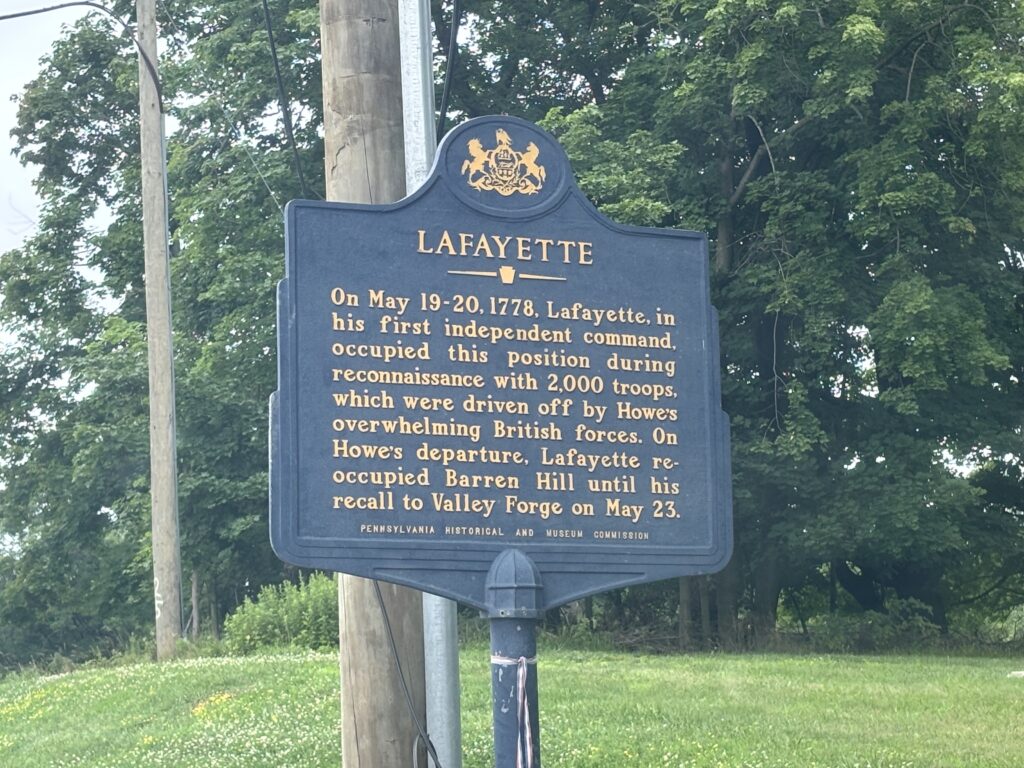
A Historical Marker on Ridge Pike by Barren Hill Road.